Development of the Situation on the Kiekinkoski Front
At the outbreak of the Winter War, the Kiekinkoski sector was defended by Detached Company Kaasila (Er.K Kaasila). The company was responsible for guarding the border, with outposts established at Jonkero, Kuusijärvi, Saunajärvi, Hukkajärvi and Kiekinkoski.
The northern Kuhmo border was defended by the 2nd Company of Detached Battalion 14 (2nd Company, Detached Battalion 14 / 2./Er.P 14). Its outposts were located at Viiksimo, Kannaksen Talo, Korkana, Vartius, Kinnula and Lentiira.
On 1 December 1939, an enemy force of approximately two companies advanced to Hukkajärvi. The following day, the Finnish forward positions were withdrawn to the prepared defensive line at Kiekinkoski, where contact with the enemy was established. The Soviet force compelled the Finns to withdraw from Kiekinkoski on 4 December, and from Polvela the following day. On 5 December, the Finnish troops fell back to Vääräjoki, where they engaged the enemy later that same day.
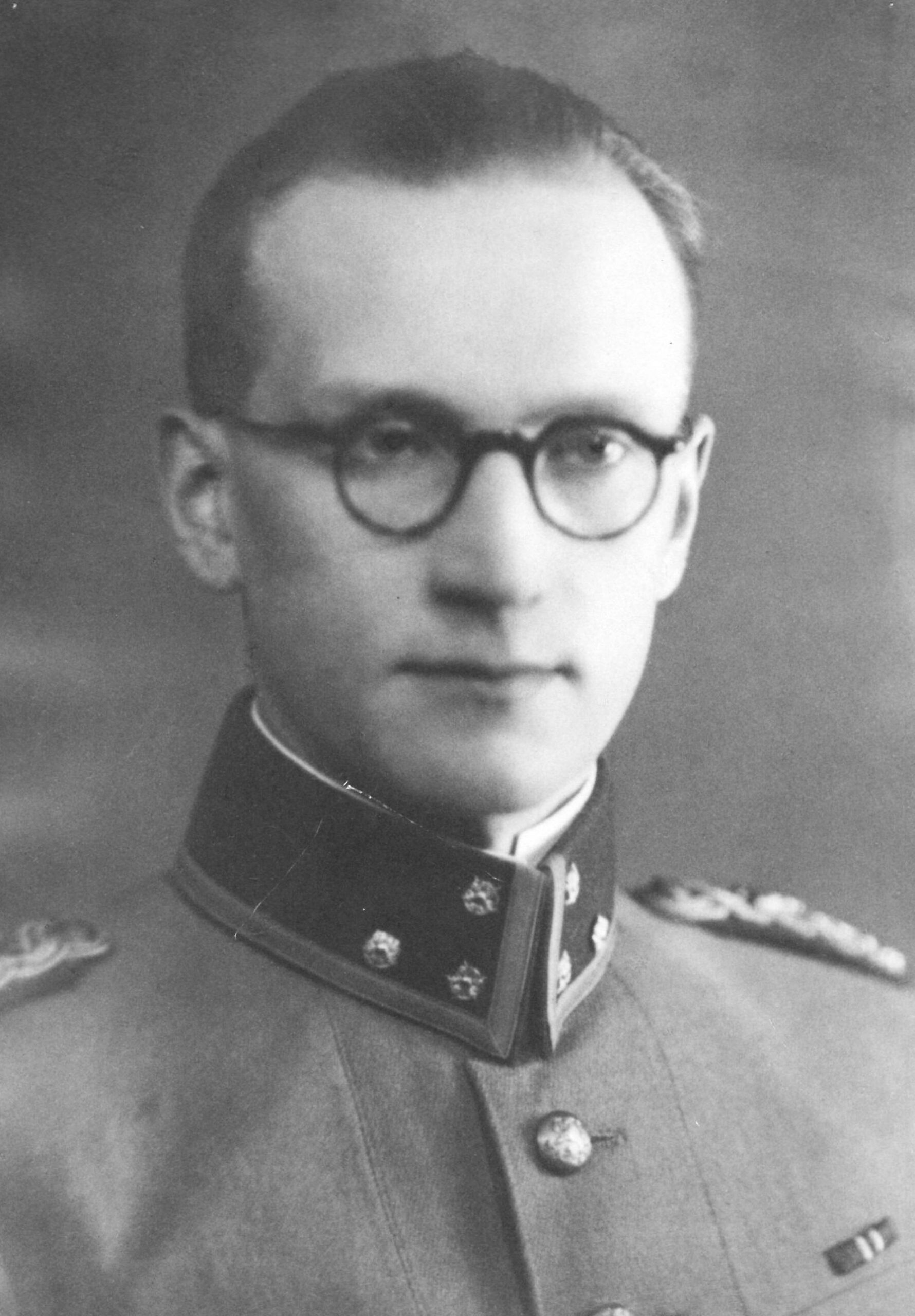
On 5 December, the 2nd Company of Detached Battalion 14, commanded by Lieutenant Jussi Kekkonen, was transferred to Vääräjoki. A new formation, Detachment Kekkonen, was established under his command. During the night of 5 December, the detachment successfully secured the threatened defensive positions at Vääräjoki. This was followed by intensive reconnaissance activity by both sides.
The enemy returned to Vääräjoki on 11 December and, taking advantage of the darkness, penetrated the Finnish positions on the following evening. The Finnish troops withdrew to defensive positions at Tyrävaara, where enemy attacks were repelled between 16 and 19 December. Detachment Kekkonen carried out active reconnaissance patrols throughout this period; for example, the bridge at Vääräjoki was destroyed four times to hinder the enemy’s advance.
The Battle of Tyrävaara According to Osmo Rasilo
Osmo Rasilo (born 1917) was appointed commander of Reconnaissance Detachment 4 (TO 4), which had been formed in Kajaani. The detachment was ordered to move to Kuhmo on 3 December and, on 12 December 1939, was placed under the command of Detachment Kekkonen. The journey was delayed by a partially frozen ferry crossing, and the unit did not arrive until the following day.
Kekkonen’s attack plan was based on the enemy’s practice of spending the night at the Ranta farmhouse, protected only by a close security force. The attack order was issued at 18:00 on 23 December 1939, with the assault scheduled to begin at 08:00 the following morning. The assault troops ate at three o’clock in the morning before moving into their assembly positions well ahead of time.
Rasilo’s reconnaissance detachment served as Kekkonen’s reserve and advanced to the road junction leading to the Ranta farmhouse. An anti-tank gun was positioned on the road in preparation for possible enemy armoured vehicles. Two Finnish companies attacked directly from the west. The assault was preceded by a two-minute mortar bombardment from positions north of Kupsusenjärvi, approximately one kilometre from the target. The fire preparation was successful.
Kekkonen and Rasilo soon realised that the attack was making little progress. Heavy fire was exchanged by both sides, but the Finnish advance stalled. A report arrived stating that further progress was impossible, and Lieutenant Kaasila had been seriously wounded in the abdomen. Kekkonen ordered the attack to be renewed. A new assault time was set, and Rasilo’s detachment was committed in support of the main force.
As the troops advanced, it became apparent that the enemy had already begun to withdraw. Rasilo’s detachment was ordered to move to Kortevaara to block the enemy’s retreat.
The detachment reached its position in time but opened fire too early, while the enemy was still beyond effective range. The Soviet advance halted, and a firefight followed in which the enemy held superior firepower. The Soviet rearguard provided heavy covering fire while the main force escaped through the forest. Rasilo’s men pursued the retreating troops but failed to catch them. An additional Finnish platoon under Second Lieutenant Kauko was also sent to Vääräjoki, but it too was unable to halt the retreat.
The remaining Finnish forces continued the pursuit, while Rasilo’s detachment returned to Tyrävaara. There, Jussi Kekkonen congratulated the men on their performance, presenting Rasilo with a cigar and the last few centimetres of cognac remaining in a bottle. By then, the first hours of Christmas Day had already begun.
The enemy supply column was captured in the Kortevaara area on 24 December, and the remainder of the Soviet battle group was destroyed in the Battle of Kiekinniemi on 28 December 1939.
A memorial dedicated to Detachment Kekkonen stands at Tyrävaara. Jussi (Johannes) Kekkonen was the younger brother of President Urho Kekkonen.The memorial was designed by Yrjö Vuorio and erected by local defence organisations in Kuhmo. It consists of a large natural boulder with a commemorative plaque and was unveiled on 13 August 1962. An information board describing the events of the Winter War in Kuhmo is also located at Tyrävaara. The site is easily accessible. There is a parking area beside the memorial with sufficient space for buses. Address: Hukkajärventie 1105 (Road 9121), FI-88900 Kuhmo, Finland.
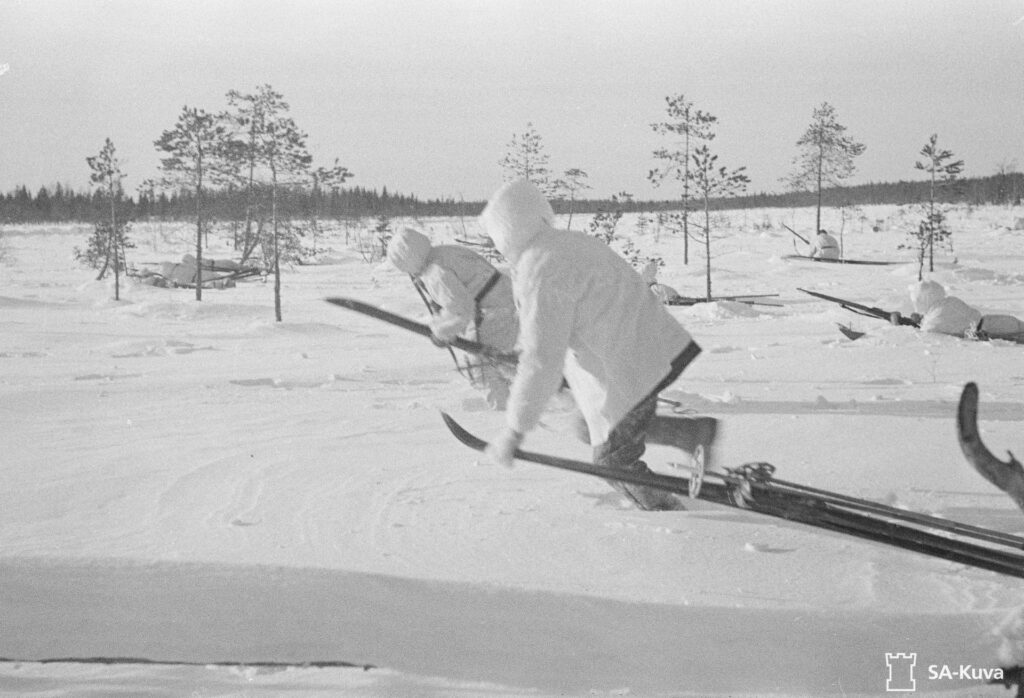
Finnish troops on the attack. SA-kuva.
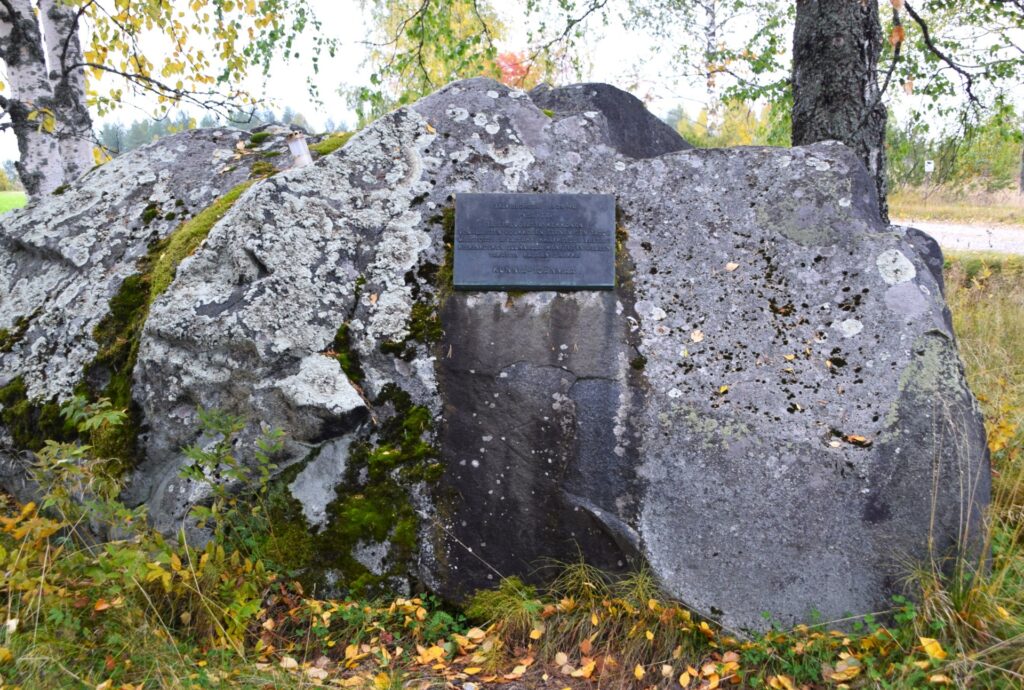
The Tyrävaara Memorial. Photo: Lassi Piirainen.
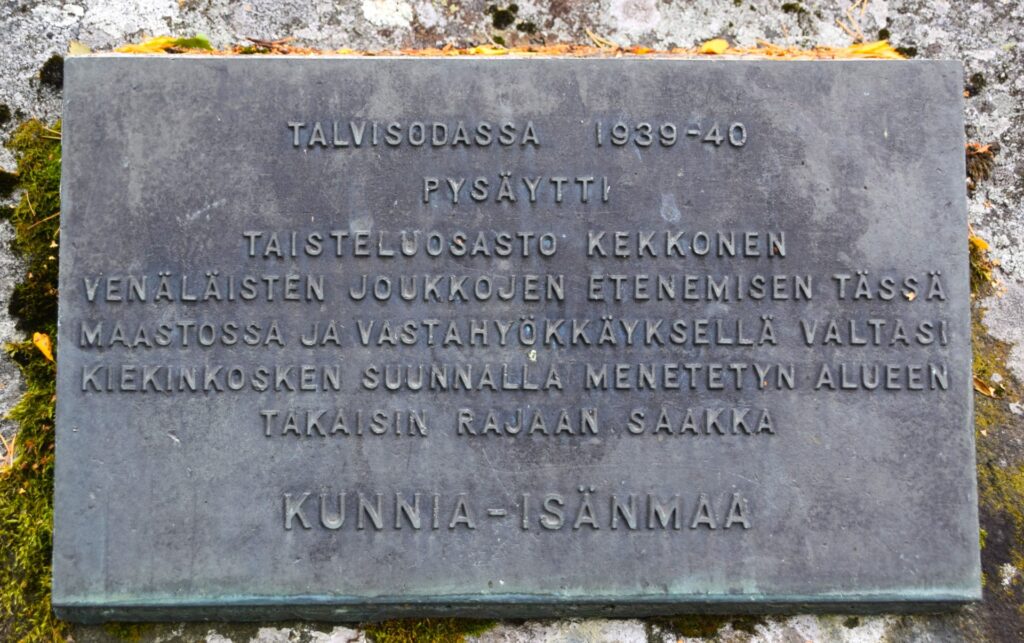
The inscription on the memorial. Photo: Lassi Piirainen.
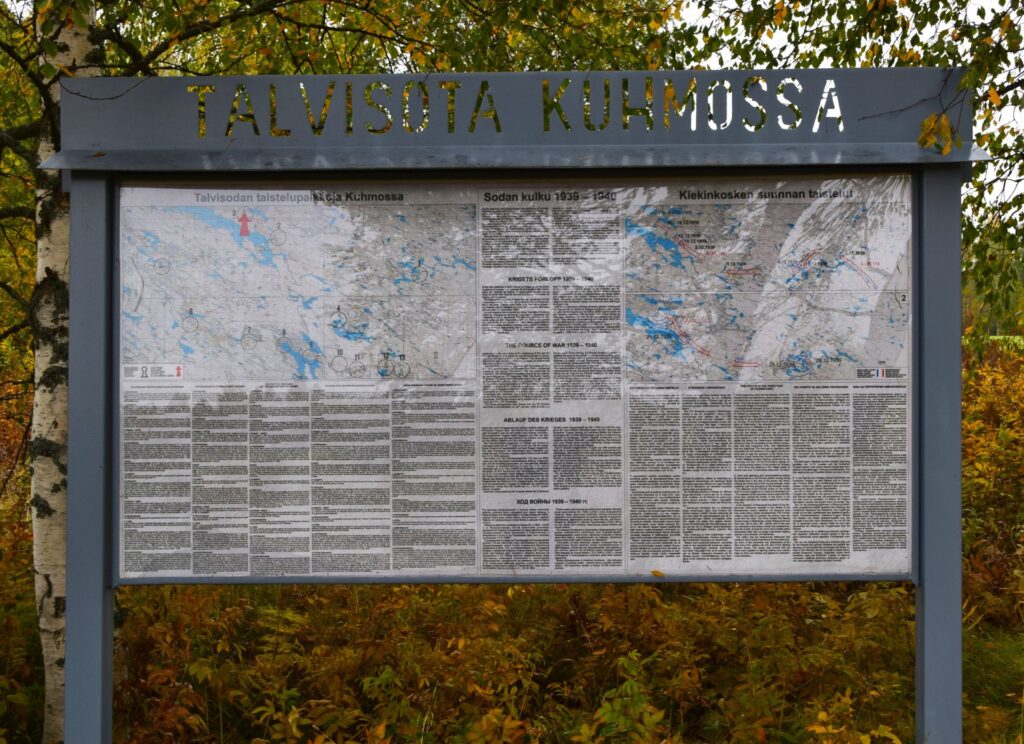
The Tyrävaara information board. Photo: Lassi Piirainen.
